
Single-use plastics in forensic medicine: exploratory study at Telangana State Annual Forensic Medicine Conference 2026
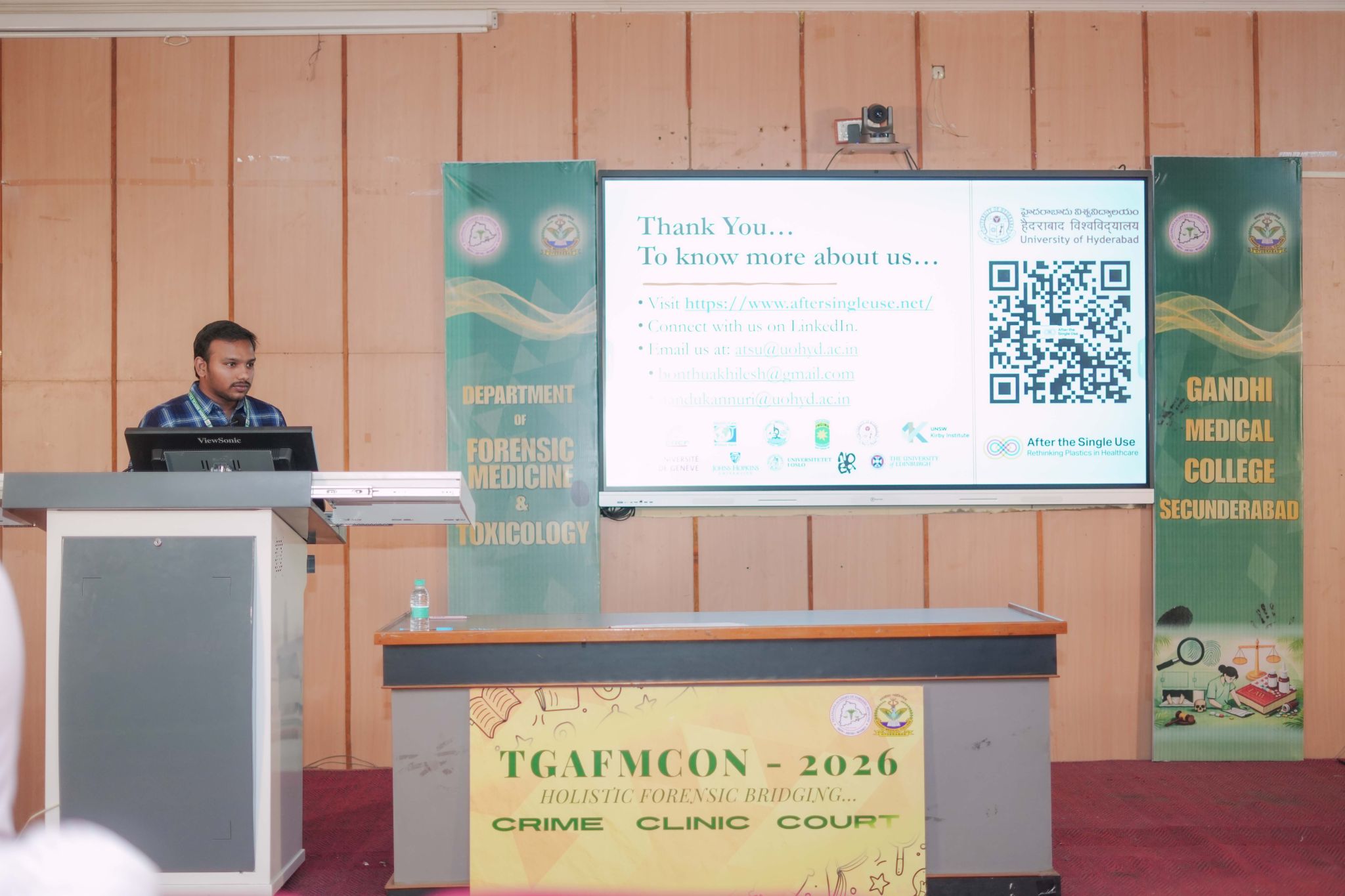
After the Single Use researcher Akhilesh Bonthu presenting a paper at Telangana State Annual Forensic Medicine Conference 2026.
Body
After the Single Use researcher Akhilesh Bonthu presented a paper titled ‘Single-Use Plastics in Forensic Medicine: An Exploratory Study of Mortuaries in Andhra Pradesh & Telangana’ at the Telangana State Annual Forensic Medicine Conference 2026 (TGAFMCON 2026), a major academic event organised by the Telangana Academy of Forensic Medicine.
The presentation explored the widespread use of single-use plastics (SUPs) within forensic pathology and mortuary settings, an area that has received limited attention within existing discussions on healthcare plastics and sustainability. Drawing on perspectives from the Anthropology of Plastics, the study examines how disposable materials have become embedded within forensic autopsy workflows through concerns around hygiene, biohazard containment, and evidence preservation.
The formative study was conducted at Government Medical College, Ongole, and Osmania Medical College, Hyderabad. Research methods included direct observation, informal discussions with mortuary staff, and exploratory interviews with forensic medicine faculty. Participants also undertook free-listing exercises to catalogue plastic items used during autopsy procedures, their functions, and disposal pathways.
Initial findings indicate that single-use plastics permeate every stage of the autopsy process. Frequently used items included body bags, weighing scale sheets, X-ray films, plastic sample vials, swabs, and personal protective equipment such as aprons, face shields, and shoe covers. Researchers also identified variations in plastic use depending on the condition of bodies and local cultural practices surrounding post-mortem care.
The study additionally raised concerns about the material properties of certain plastic containers used in toxicology procedures, with forensic practitioners noting potential implications for forensic accuracy and sample integrity.
The research highlights the ecological impacts of plastic-intensive forensic practices while recognising the important role disposables currently play in maintaining hygiene and evidentiary standards. The findings support further investigation into validated reusable or biodegradable alternatives, revised procurement approaches, staff training, and improved waste-management protocols adapted to medicolegal settings.