
Making medical materials visible at Med-Tech Expo 2026
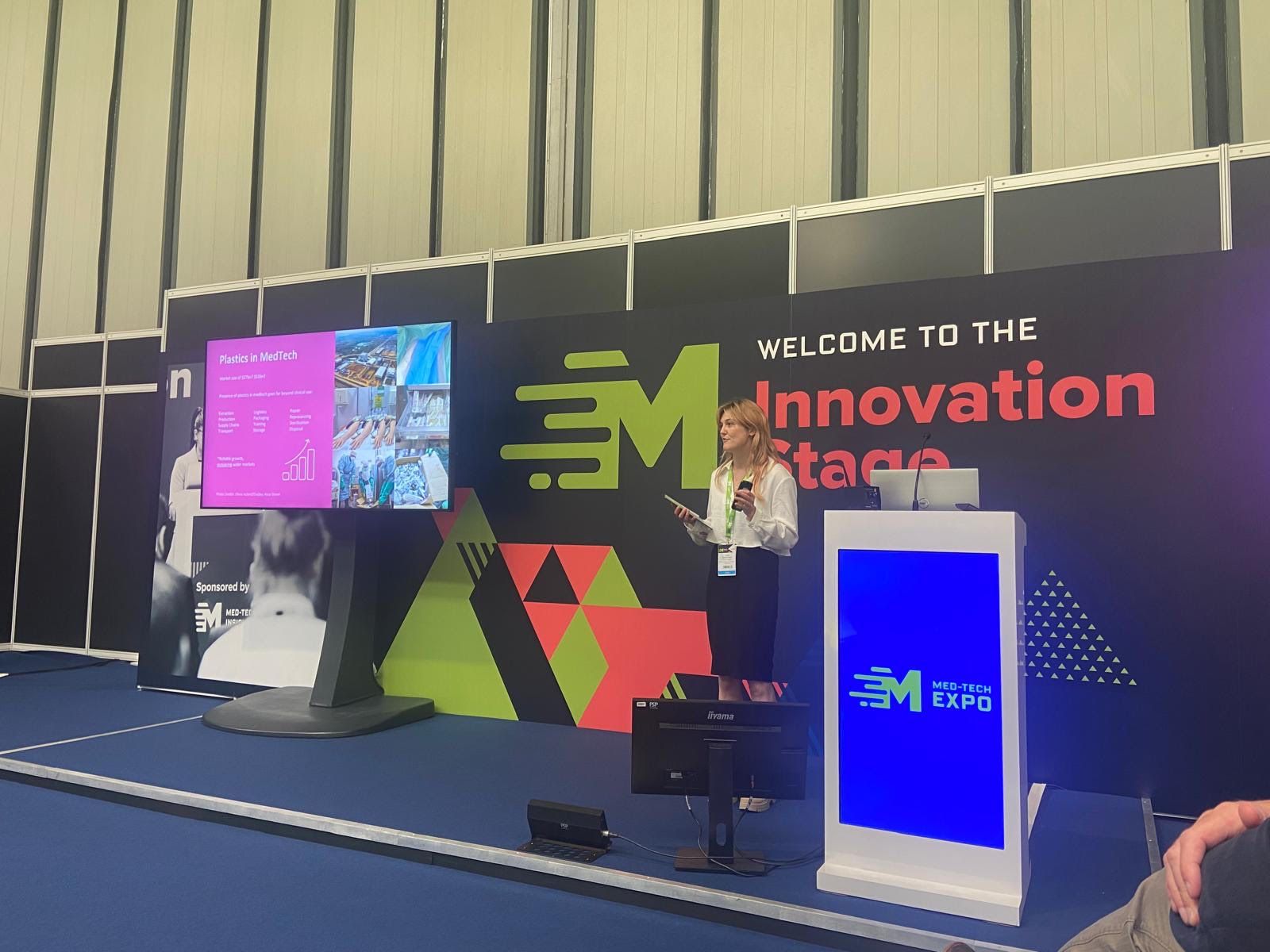
Millie Marriott Webb presenting at Med-Tech Expo 2026
Body
After the Single Use researchers Alice Street and Millie Marriott Webb participated in Med-Tech Innovation Expo 2026, one of the UK’s leading events for medical device design and manufacturing. Co-located with InterPlas, the UK’s largest plastics conference, the event provided a valuable opportunity to connect with stakeholders working across medical technology, plastics, healthcare, design, regulation, and sustainability.
As part of the Innovation Stage programme, Millie Marriott Webb presented ‘What Comes After the Single Use for MedTech’. The presentation introduced research from the project into the material composition of common medical devices, the environmental impacts of single-use plastics, and the regulatory and procurement challenges involved in moving towards more sustainable alternatives.
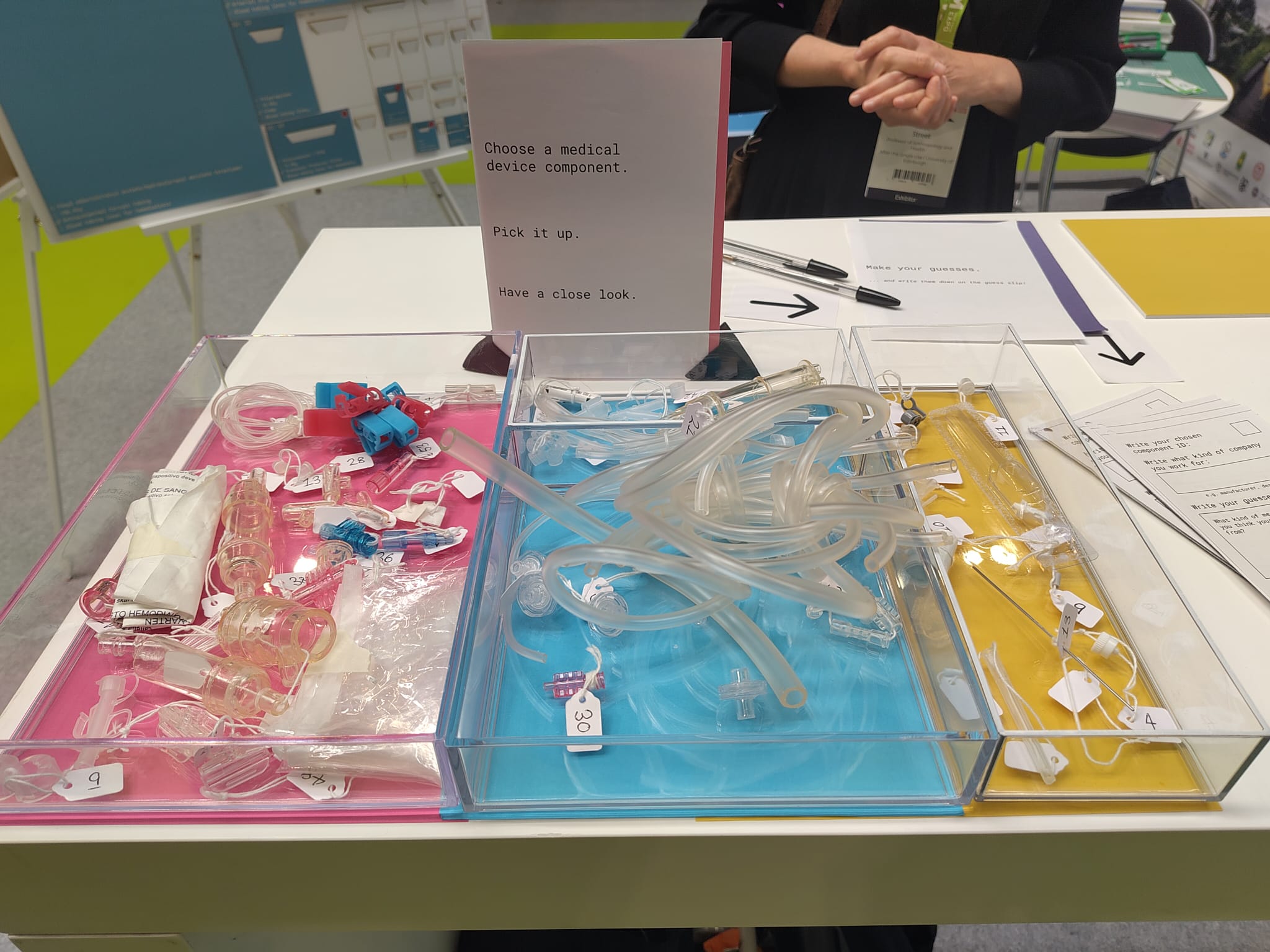
Alongside the presentation, Alice Street and Millie Marriott Webb presented the Deconstructing Devices project through an interactive stall. The display physically broke down everyday medical technologies into their component materials, making visible the polymers, packaging, and assemblies that are often hidden inside apparently simple products. This approach opened up conversations about material transparency, product lifecycles, carbon impacts, and the difficulty of recovering materials from medical devices designed for single use.
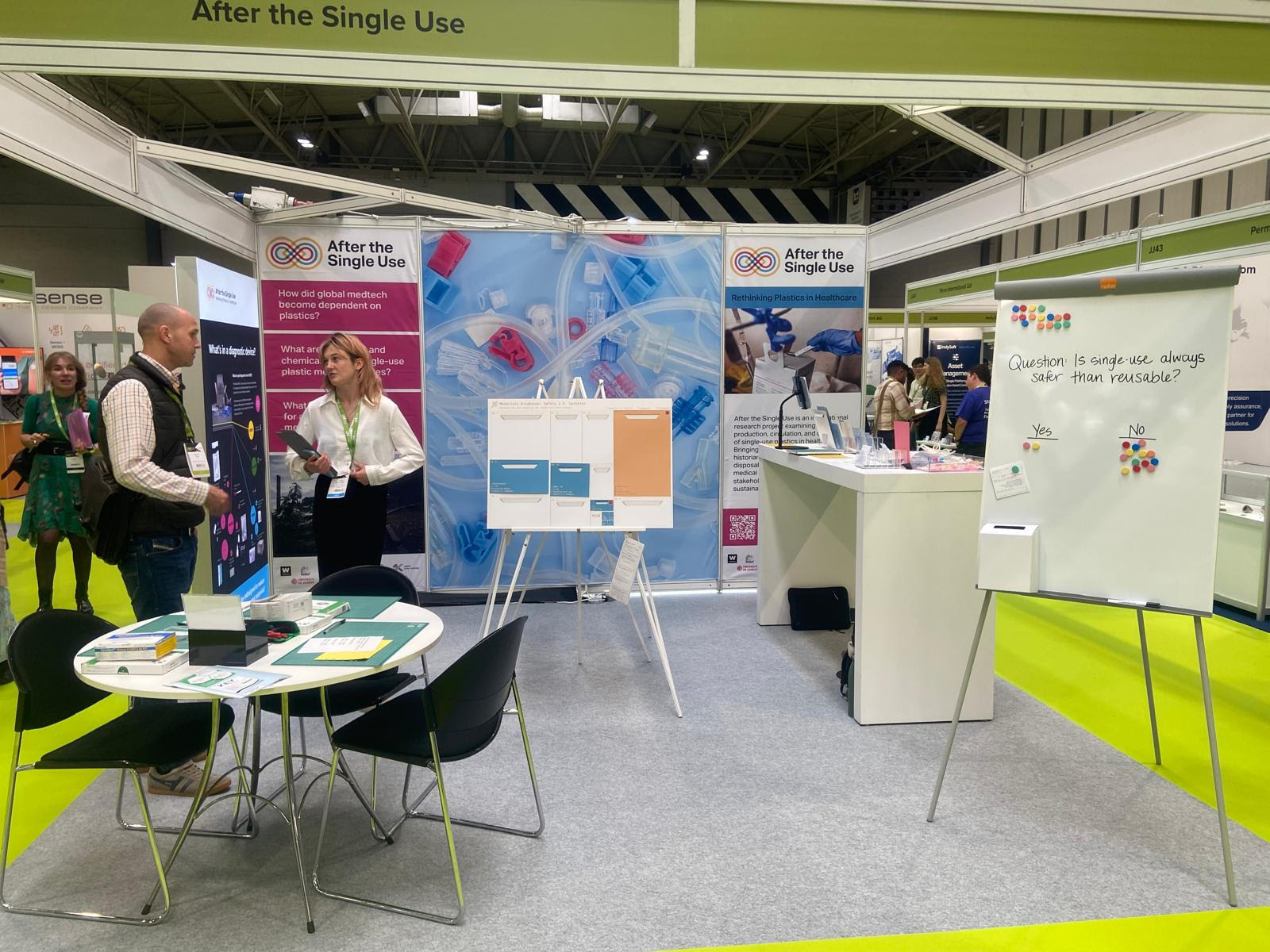
The stall quickly became a focal point for sustainability discussions at the event, generating over 100 engagements with people working across the medical device lifecycle. Conversations ranged from product design and polymer production to regulation, clinical use, sustainability strategy, and manufacturing leadership, reflecting the breadth of stakeholders involved in shaping the future of medical devices.
These conversations revealed a clear appetite within the med-tech sector for research that can help stakeholders better understand the environmental impacts of medical devices. Several visitors asked the team for advice on how to reduce reliance on single-use plastics, rethink material choices, and address sustainability challenges within their own products and organisations. For the project team, this suggested that the stall was addressing a significant information gap, bringing research on plastics, toxicity, and lifecycle impacts to audiences with the capacity to influence change in the sector.
The event also generated 13 potential collaboration opportunities, extending well beyond the team’s original networking strategy. Several manufacturers expressed interest in contributing to the development of sustainability case studies, creating opportunities for bi-directional learning between researchers and industry partners. A further nine stakeholders expressed interest in participating in ongoing research in the sector, including through interviews, while the team were also invited to deliver a guest lecture at Newcastle University to an engineering cohort, opening up opportunities to raise awareness of material lifecycles among the next generation of engineers.
Most significantly, the team identified two key industry collaborators who verbally agreed to commit resources to support future work. One collaborator offered to provide materials for and attend future interdisciplinary workshops, while another agreed to help extend the project’s network within the manufacturing community.
For After the Single Use, Med-Tech Expo provided an important opportunity to bring historical, anthropological, and material research into direct conversation with the industries involved in designing, producing, regulating, and using medical devices. The event highlighted the value of making the hidden material systems of healthcare visible, and demonstrated the role research can play in supporting more sustainable approaches to medical technology.