
Cleaning and sterilising hospital textiles in the early Twentieth Century
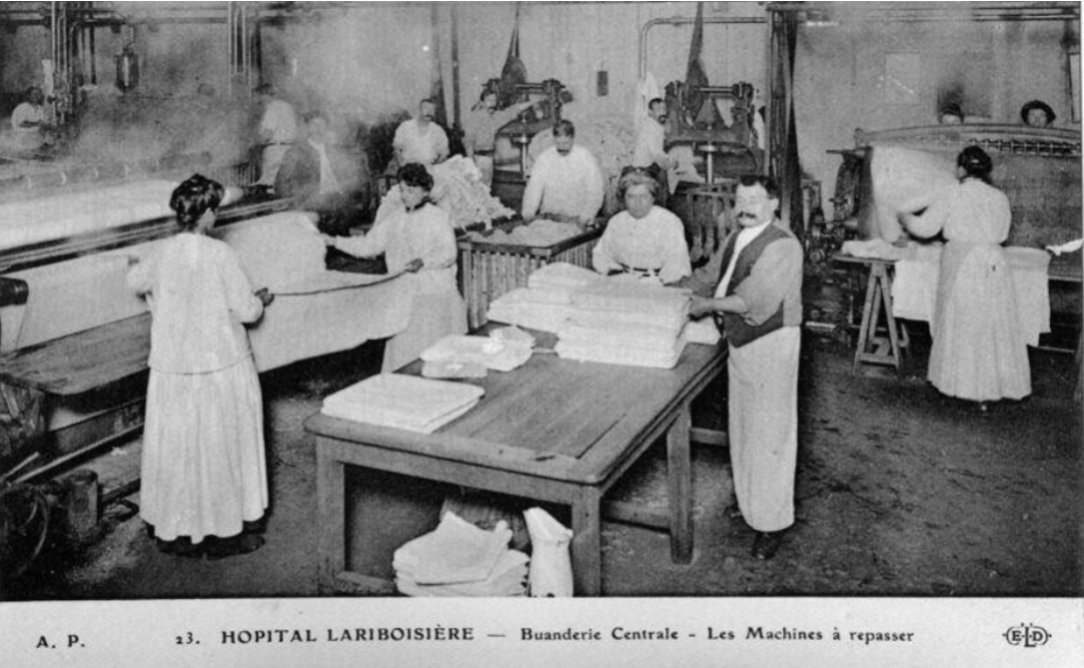
Copyright: ©AP-HP archives, Lariboisière hospital, around 1900.
Body
After the Single Use researcher Eloïse Richards presented ‘Behind the White Coat: Cleaning and Sterilizing Hospital Textiles in the Early 20th Century’ at the international conference ‘A History of Textile Cleanliness: Washing and Perfuming Fabrics from the Medieval to the Modern Period’, held 27–29 May 2026 at the University of Bern and Abegg-Stiftung, Riggisberg.
The paper examined the central role of textiles in hospital care, including dressing materials, surgical drapes, bed sheets, covers, and gowns for patients and staff. Until the mid-twentieth century, many healthcare institutions produced, repaired, laundered, disinfected, and sterilised these goods in-house, relying on the work of hospital workers.
Richards explored how the expansion of hospital care increased the volume of textile goods that had to be maintained, generating new infrastructural pressures and debates over whether hospitals should modernise on-site facilities or turn to external industrial laundries. At the same time, the adoption of antisepsis and asepsis transformed expectations around hygiene, requiring many textile items to be treated with chemical agents or steam. These processes could damage fibres and shorten the lifespan of materials, shaping decisions about which textiles hospitals purchased and how they were used.
Drawing on early twentieth-century hospital journals from the United States, France, and Switzerland, the paper considered hospital laundering and sterilisation as sites where medical, material, economic, and social concerns converged. It argued that hospitals should be understood not only as sites of care, but also as sites of textile production and maintenance.
By foregrounding the largely invisible labour and infrastructures that made hospital hygiene possible, the presentation connected with After the Single Use’s wider interest in reuse, sterilisation, material lifecycles, and the historical conditions that preceded the rise of disposable medical technologies.