
Plastic Amnesias at HSS 2026: forgotten histories of plastics and health
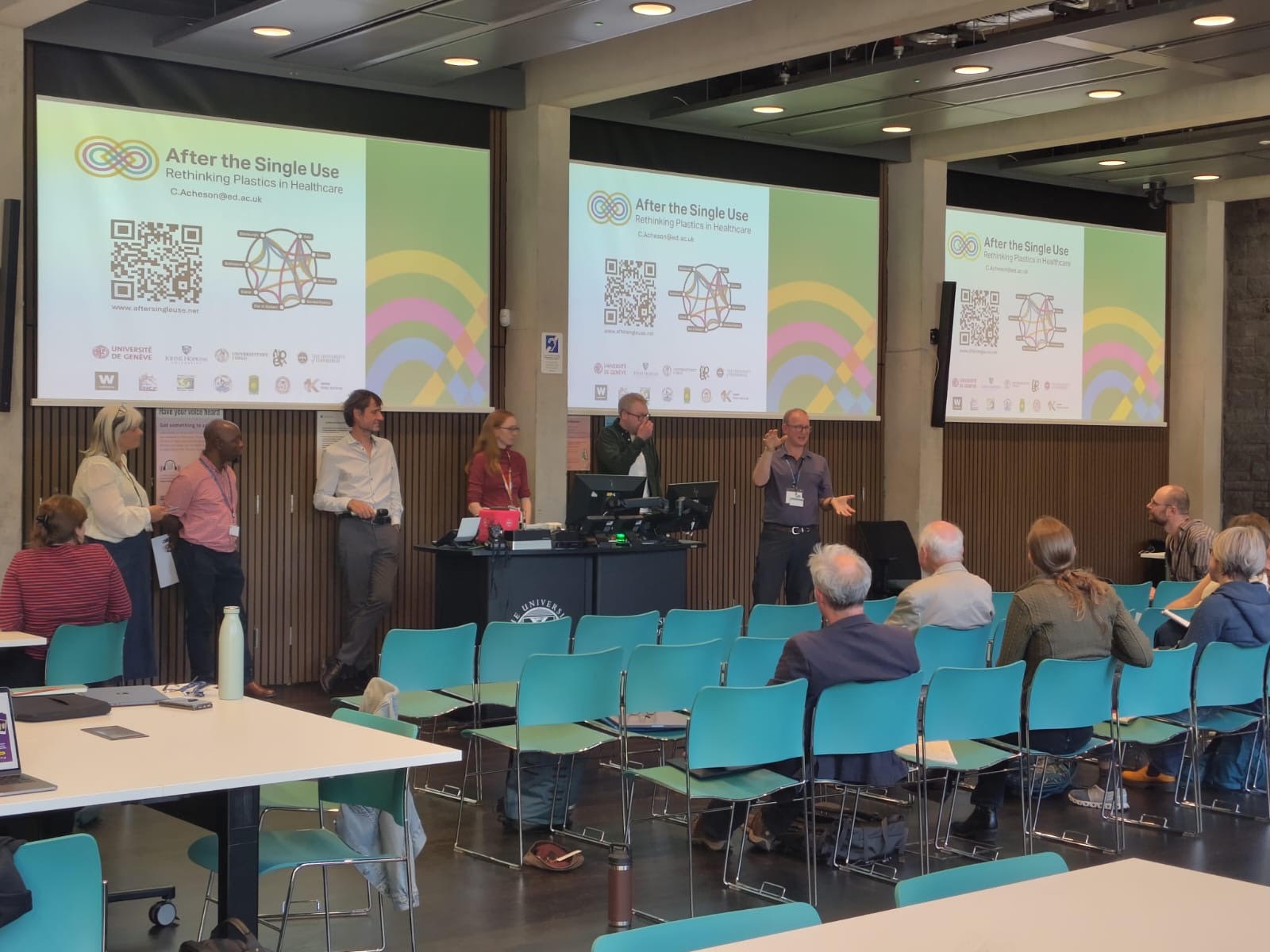
After the Single Use researchers at HSS 2026.
In July 2026, After the Single Use researchers contributed to two linked panels at the joint meeting of the European Society for the History of Science and the History of Science Society in Edinburgh. Held at the Edinburgh Futures Institute, Plastic Amnesias I & II explored how knowledge about plastics and health has been contested and repeatedly forgotten as single-use materials became embedded in healthcare.
“Plastics,” as the 2025 Lancet Countdown on Plastics and Health now informs us, "are a grave, growing, and under-recognised danger to human and planetary health” whose health hazards, which disproportionately affect poor and marginalised populations, are compounded by continuing exponential increase in production: 2 megatons in 1950, 475 megatons in 2022, and a projected 1200 megatons by 2060. While the new Lancet commission now actively seeks to build consensus around the health risks posed by single-use plastics production, circulation, consumption, incineration, and discard, the knowledge-base of these harms has for decades been a site of active contestation, denial, and erasure.
Over the past half-century, as single-use plastics became essential for the fields of health and medicine, documentation of the health risks of these ever-adaptive synthetic compounds has been iteratively forgotten. The papers of this double panel explore different interfaces of “plastic amnesia”: from committees of pharmacologists and toxicologists who raised concerns over leachants and what we now call “microplastics” in the early 1960s, to the lay concerns over plastic incineration in the 1970s and 1980s, to the knowledge-practices of reusable technologies forgotten in the transition to single-use infrastructures, panellists trace the forgotten archives of plastics knowledge from Europe, North America, and East Africa.
Taken together, these papers map out the gaps built into global standards and registries of medical and consumer products such as ISO 13485 and the FDA’s medical device database collection, and trace how certain assurances of health safety have flourished and circulated as platforms for plastics consumption, while other evidentiary bases of toxicity and harm have been repeatedly contained and forgotten.
Read more about our panels: here.