
Plastic Amnesias at HSS 2026: forgotten histories of plastics and health
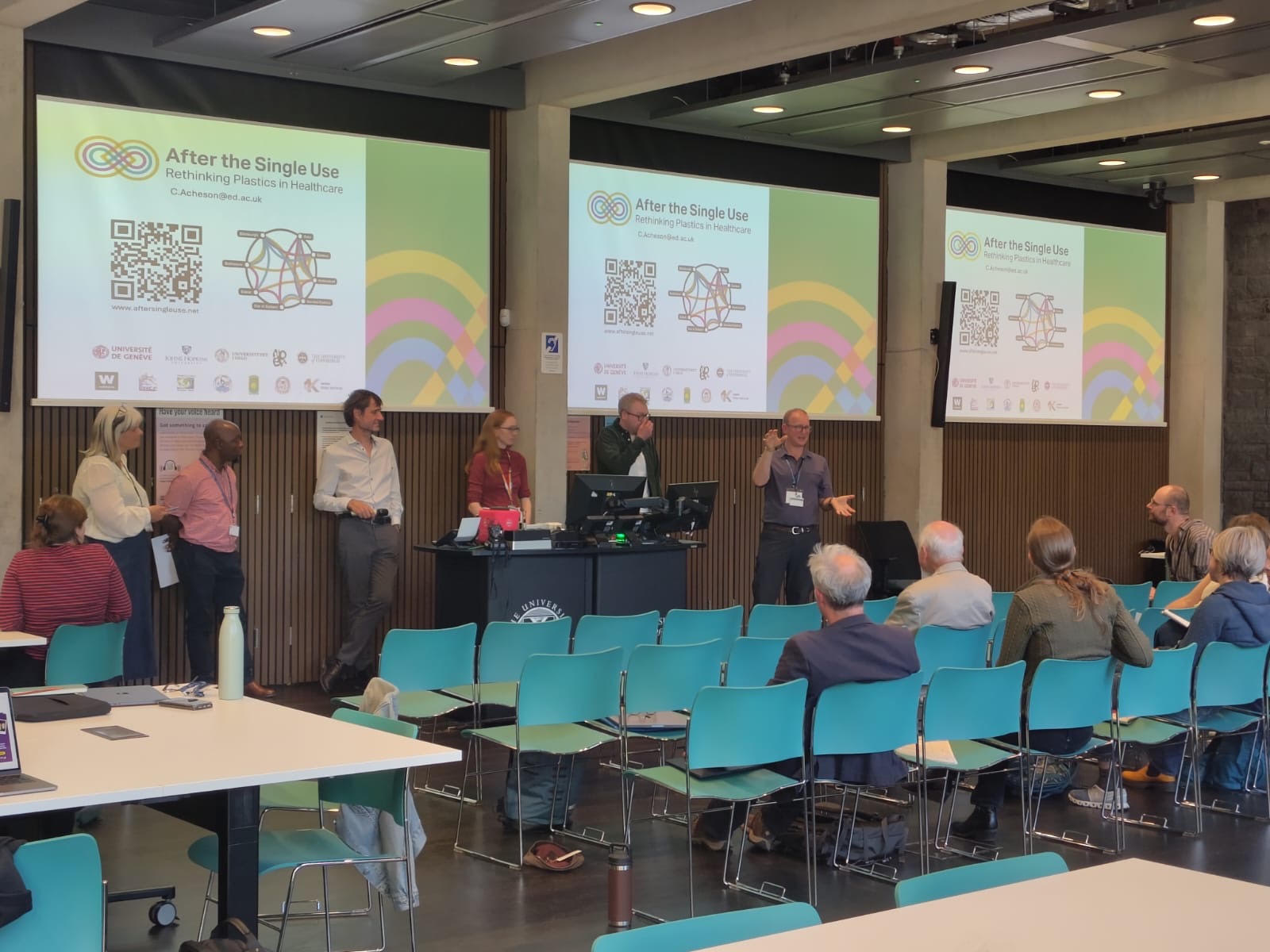
After the Single Use researchers at HSS 2026.
In July 2026, After the Single Use researchers contributed to two linked panels at the joint meeting of the European Society for the History of Science and the History of Science Society in Edinburgh. Held at the Edinburgh Futures Institute, Plastic Amnesias I & II explored how knowledge about plastics and health has been contested and repeatedly forgotten as single-use materials became embedded in healthcare.
The first panel chaired by Anne Kveim Lie examined changing understandings of plastic toxicity across medicine, industry and global health. Eloïse Richard and Bruno Strasser explored how ethylene oxide gas sterilisation enabled the expansion of disposable plastic medical devices. Drawing on trade and hospital journals, industry documents, and U.S. governmental publications, the paper examined the production and invisibilization of knowledge about the health risks of ethylene oxide, and the convergence of interests between the chemical and medical device industries in preventing its regulation.
Jeremy Greene revisited what FDA official Earl Meyers called the “plastics problem” in 1967, when the promise that plastics were inert was being challenged. Drawing on regulatory, industry and archival sources, the presentation examined how new sciences of “medical-grade plastics” were developed to reassure regulators, despite opposition from clinicians and consumer groups, and how this earlier recognition of synthetic harms was largely erased following the Medical Device Amendments of 1976.
Andrea Azizi Kifyasi examined how HIV/AIDS prevention campaigns contributed to the expansion of single-use plastics in Tanzania. Focusing on the period before antiretroviral therapies became available in 2004, the presentation traced how strategies supported by the Global Program on AIDS and other agencies promoted products such as condoms, disposable syringes and gloves. It considered how these vital public-health interventions also created lasting waste-management pressures in countries without the infrastructure or resources to manage increasing volumes of plastic waste.
Cat Acheson and Rob Ralston examined how plastics have been reframed in global governance over the past decade. Once understood primarily through end-of-life pollution and inadequate waste management, plastics are increasingly being recognised as a human-health emergency involving toxic exposure across their lifecycle. The presentation considered how this shift is shaping negotiations for a Global Plastics Treaty, and why it remains contested.
The second panel, again chaired by Anne Kveim Lie turned to forgotten infrastructures and gaps in contemporary knowledge. Dani Farrow examined how the decline of hospital laundering and sterilisation services has left healthcare systems dependent on single-use plastics, asking what recovering these skills and infrastructures might make possible.
Mary McPoland, Claire Lindsay and Maïwenn Kersaudy-Kerhoas traced how plastic cassette housing became ubiquitous in lateral flow testing, from the first wand-based pregnancy tests sold in 1986 to today’s global testing systems. They highlighted two historical disruptions: tests used outside laboratories have not always been cased in plastic, while devices designed for use “in the wild” are now returning to clinical laboratories in large volumes, still enclosed in durable plastic. These histories challenge the plastic consensus in diagnostic testing and open possibilities for the engineering of more sustainable global health futures.
Millie Marriott Webb examined gaps in knowledge about medical-device materials through ISO 13485, the international quality-management standard developed in the 1990s. Although manufacturers retain detailed component information, limited access to this data can obscure longer-term harms and restrict opportunities for repair, recovery and more circular practices.
Across the two panels, the presentations showed that the dominance of plastics in healthcare was not inevitable. By recovering forgotten evidence, technologies and forms of expertise, Plastic Amnesias opened up questions about how assurances of safety became embedded in medical systems, and how those assumptions might be reconsidered today.
Read the double panel abstract: here.